Poultry Farm Insurance

Poultry Farm Insurance is essential for any operation, providing tailored cover for property, livestock, liability, and business risks.

For over 20 years, Agripro Insurance Brokers has partnered with poultry producers across Australia, arranging tailored poultry farm insurance to manage risks across property, livestock, and business operations.

Through our industry expertise, we consistently see challenges arise when generalist brokers or insurers don’t fully understand the complexities of poultry production. Below, we highlight key areas where poultry risk management and tailored coverage are essential.
Poultry Farm Property Insurance: Ensuring Adequate Sums Insured 

Since COVID-19, building and construction costs have risen dramatically. For example, prior to the pandemic, new broiler shed construction averaged $800,000 per shed. Today, costs are closer to $1,300,000, representing a 60% increase over five years. 

Producers who haven’t reviewed their farm property insurance sums insured risk significant underinsurance potentially leaving their operation financially exposed during a claim, even when premiums have been consistently paid. 

Example of Underinsurance 

Item 

Amount 

Sum Insured 

$800,000 

Actual Replacement Value 

$1,300,000 

Co-Insurance Requirement 

80% 

Total Loss Claimed 

$800,000 

Outcome: 

  • Insurer Pays: $615,385 (less deductible) 
  • Uninsured Portion: $184,615 (plus deductible) 
  • True Financial Impact: $684,615 

In this example, the farm would need to cover nearly $700,000 out-of-pocket to restore the shed. Saving on premiums through underinsurance would take over 200 years to offset this loss. 

Tip: Engage professional valuers or construction experts to ensure your property insurance accurately reflects replacement costs. 

Poultry Farm Construction & Renovations 

We regularly work with large poultry operations during expansion and renovation projects, advising on insurer-acceptable construction standards. Engaging your insurance provider during the planning phase is essential to maintain comprehensive farm insurance coverage. 

Key considerations include: 

  • Fire protection systems installed to engineering standards 
  • Annual thermal imaging of switchboards 

These measures not only protect your operation but can also improve insurer confidence, enhance farm property insurance terms, and manage long-term premiums. 
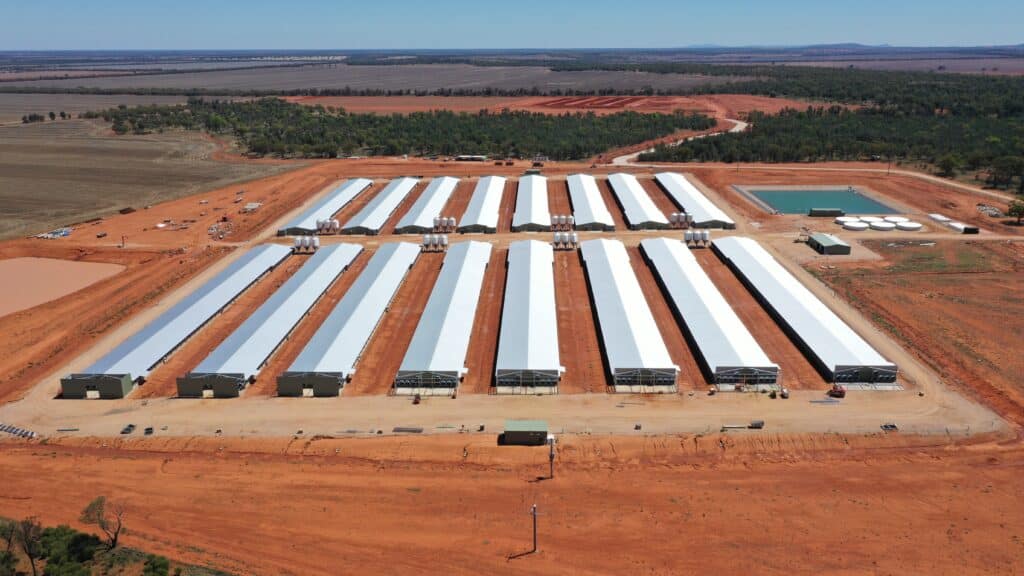
Poultry farm infrastructure and sheds protected under poultry farm insurance Australia
default

Poultry Farm Liability Protecting Against Hidden Risks

While poultry farms share some liability risks with other agricultural enterprises, the presence of livestock under care, custody, and control introduces unique exposures for broiler operations. 

  • Negligence as a trigger: A processor alleging negligence in bird mortality could lead to substantial claims. Ensure farm liability limits are sufficient for your operation’s scale. 
  • Contractual obligations: Liability policies often exclude contractual claims, making it critical to review processor agreements and align insurance coverage accordingly. 
  • Mortality cover: Larger farms or high-risk contracts may require comprehensive livestock insurance to properly transfer risk. 
  • Labour hire risks: Using labour hire on farms must be disclosed to insurers—failure to do so may result in denied claims. 

Poultry Farm Livestock Insurance Avian Influenza & Business Interruption 

Global disease outbreaks such as Avian Influenza have increased risk awareness among poultry producers. While standard farm insurance policies may cover fire, lightning, and malicious damage, they often fall short when it comes to disease and interruption risks. 

A tailored All Risks Mortality Livestock Insurance Program can include: 

  • Machinery breakdown (cooling, feed, water systems) 
  • Heat stress and environmental event protection 
  • Disease outbreak coverage (Avian Influenza, Newcastle Disease) 
  • Business interruption insurance for gross profit protection 
  • Debris removal and disinfection costs 

EADRA and Poultry Farm Insurance Managing Disease and Business Risks

The Emergency Animal Disease Response Agreement (EADRA) outlines cost-sharing arrangements between government and industry during livestock disease outbreaks. While EADRA provides compensation for directed slaughter, it does not include business interruption cover. 

A complementary livestock insurance policy ensures farms are protected for: 

  • Business interruption due to quarantine or restocking delays 
  • Agreed livestock values if farm gate prices fall 
  • Non-EADRA diseases and contamination events 
  • Mechanical breakdown, fire, lightning, flood, and heat stress 

Agripro Insurance Brokers Your Partners in Poultry Risk Management 

At Agripro, we understand that poultry production is complex combining challenges in biosecurity, infrastructure, and compliance. Our team brings together decades of experience in poultry insurance and farm risk management: 

  • David Mathieson – Director: Over 20 years in agricultural insurance, specialising in poultry risk, Avian Influenza, and infrastructure protection. 
  • Anita Goodman – National Operations Manager: 25+ years of underwriting and broking experience, known for practical, producer-focused solutions. 
  • Jarrah Ransome – Head of Customer Experience: Animal Science (Hons) graduate with a poultry research background and a strong advocate for producer outcomes. 

We’re proud to support industry collaboration, including sponsorship of the Welcome Dinner at AMPC/PIX 2026, where David and Jarrah will engage with leaders and producers to share insights on poultry farm insurance in an evolving industry. 

Find out more about our poultry farm insurance programs or request a quote.

Poultry Farm Liability Insurance

Poultry Farm Liability Insurance is vital for any poultry farming operation. It's important that the cover suits the individual farm and that time is taken to review of the liability risks associated for the farm.

Poultry Farm Liability Insurance is vital for any poultry farming operation. It’s important that the farm insurance program is structured for each chicken farm to ensure adequate cover.

Chicken inside a poultry shed with one sitting up on a drinker

Poultry farming presents distinct characteristics regarding liability risks when compared to other agricultural practices. This discussion will thoroughly explore the various factors to consider and offer guidance on securing the most suitable liability coverage for your farm.

While poultry farms typically face similar risks related to personal injury or property damage, the presence of animals under care, custody, and control significantly heightens the liability risk.

What Are The Farm Liability Risks For Poultry Farms

Poultry Farm Processor Contracts

A liability policy does not extend coverage to contractual claims. The responsibility lies with the farm, which is tasked with the cultivation and care of the birds.

Negligence serves as a trigger for a liability policy. Should a poultry processor demonstrate that a farm has acted negligently concerning the mortality of poultry, the farm may face the potential for a liability claim.

It is crucial to clarify the legal obligations of the farm and to ensure that the insurance policy is specifically designed to address these risks. There may be risks associated with the processor contract that do not fall within the parameters of liability coverage. Depending on the size of the farm and the stipulations of the contract, these risks might be more appropriately covered by a comprehensive mortality livestock insurance policy.

Poultry Farm Size & Layout

The size and layout of the farm is an important factor to consider under a liability policy. Larger farms can have more contractors, pick up crews and labour hire which all need to be considered as a risk. The layout of the farm is important as the risk can differ based on the number of sheds that are supported by the same services (gas, power and water).

The services on the farm should always be reviewed as part of the insurance process. It’s important that farm has contingency plans in place in the event of breakdown, as this can help to reduce the risk of a liability claim from processors.

Bird Numbers

The total bird numbers of the farm is relevant as this can help to determine the maximum loss exposure. A farm with 8 sheds that connect to the same power, gas and water supply may have a higher exposure.

If the processor values these birds at $3 per head and there is a loss to the birds in all 8 sheds, this could result in a potential liability claim of upwards of $500K- depending on stocking density at the time of the loss.

This is an example of why a standard limit of liability for Goods In Care Custody and Control (animals) may not be sufficient for the farm.

Maximum Loss Exposure for Poultry Farms

A number of insurers will limit their farm insurance liability insurance cover for Goods In Care Custody and Control for animals. It’s important to understand that this limit may not be enough for a potential claim against the farm for a number of reasons;

  • The farm could experience a loss that impacts more than a single shed
  • Legal costs may not be in addition to the limit of liability
  • The processor values the birds more than the growing fee the farm receives

Poultry Farm Liability Insurance Claim Example

8 shed poultry farm with a capacity of 50,000 birds per shed- 400,000 birds in total. The farm has a standard poultry farm liability cover that has a policy limit of $100,000 for animals in care, custody and control – inclusive of legal fees.

The poultry farm farm manager inputs the incorrect temperature settings for the poultry sheds and they fail to respond to the shed alarm systems- resulting in the loss of 300,000 birds.

The farm receives a liability claim from the processor for the loss of their birds due to the negligence of the farm manager. The processors claim is for $900,000 based on $3 per head.

The farm has a policy limit for $100,000 for liability claims arising from goods in care custody and control (animals);

  • Liability Claim $900,000
  • Legal Fees $20,000
  • Farm liability cover policy limit $100,000 inclusive of legal fees

As the risk exposure wasn’t considered for the farm this has resulted in the farm being underinsured by $820,000.

The true exposure for the farm based on 400,000 birds would be closer to $1.2M (based on $3 per head plus any legal fees incurred).

Poultry sheds with grain silos on a rural Australian farm

Poultry Farm Liability Cover- Labour Hire

The use of labour hire on poultry farms is growing fast. It is recommended that labour hire activities are confirmed with your farm insurance broker. The use of labour hire on poultry farms increases exposure for potential liability claims from Workcover.

There are a number of other liability risks that need to be considered within a poultry farm insurance policy. It’s important that a farm deals with a farm insurance broker who is highly experienced in poultry farm insurance.